
The two-truth definition of a hearing aid that works
Most patients who own hearing aids that they actually wear describe the same thing: they forget they have them in. Not because the aids are invisible — though that helps — but because the sound they’re delivering matches what the world is supposed to sound like. The room sounds like the room. Conversation sounds like conversation. The kettle, the cat, the grandchildren’s voices return at their natural relative volumes.
At BestHear, we use two markers to verify a fitting is working. The wearer forgets they’re wearing the aids. The people around them stop being reminded that the aids are needed. When both are true, the fitting has succeeded. When either is missing, the fitting continues. We call this the two-truth standard, and it’s the working definition we use to know when a Heareka method fitting is complete.
Why “forgetting you’re wearing them” is harder than it sounds
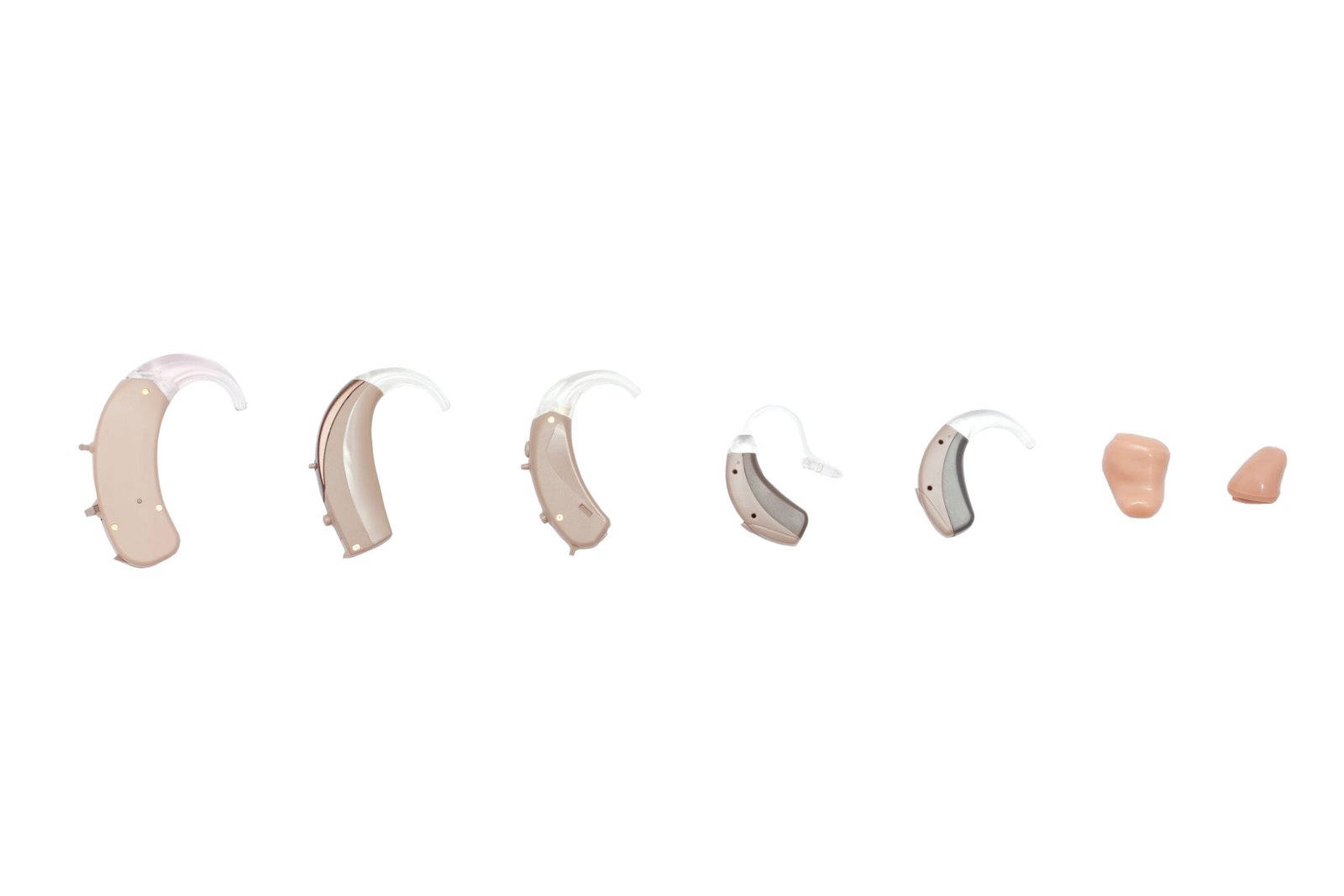
The technology to make hearing aids you forget you’re wearing already exists. Modern digital hearing aids are physically discreet, automatically adjust to changing sound environments, suppress background noise, sync to phones and televisions, and run for over a day on a charge. The engineering has largely solved the device side of the problem.
What hasn’t been solved at scale is the fitting side. The amount of patient-specific tuning required to get the device to deliver hearing the wearer trusts is significant — and the conventional fitting protocol stops at a halfway point that, in our clinical experience, leaves consistent gaps between what the device can do and what the wearer actually experiences.
The result is well-documented across the audiology profession: a meaningful proportion of patients fitted by conventional protocols end up with their hearing aids unused in a drawer within months. Sometimes weeks. The aids aren’t broken. The audiogram looks fine. But the world still sounds wrong — sharp where it should be soft, loud where it should be background, exhausting in a way that makes the cinema, the dinner table, the grandchildren’s birthday feel like work.
What’s missing from the conventional fitting
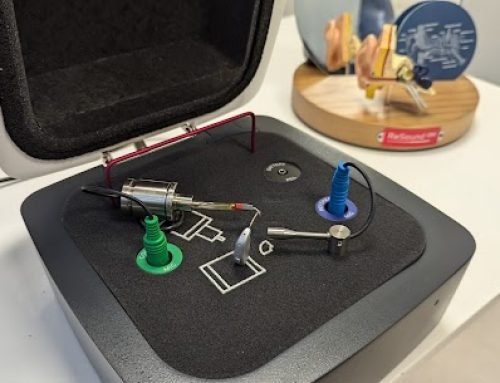
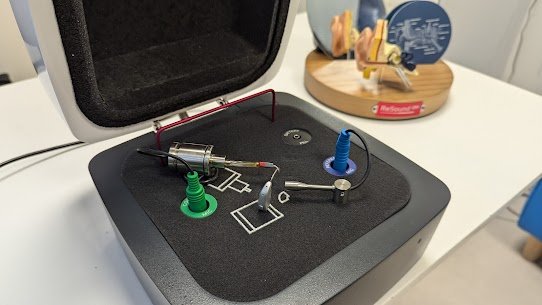
The clinical gold-standard verification step in a hearing aid fitting is called Real Ear Measurement (REM). A thin probe microphone is placed near the eardrum to measure exactly what amplification the hearing aid is delivering, against the prescription target. This is non-negotiable in any competent fitting. Many high-street fittings skip it. We don’t.
But REM verifies one thing only: that the device is delivering the prescribed amplification at the eardrum. It does not verify that what the wearer experiences matches what they need to experience. Two patients with identical audiograms and identical REM-verified fittings can have wildly different lived outcomes — one wears the aids constantly, the other puts them in the drawer.
That gap between “the device is working” and “the wearer is experiencing hearing they trust” is what the Heareka method was developed to close. It’s also what conventional fittings consistently leave open.
What the Heareka method does differently
A Heareka fitting combines REM with structured subjective fine-tuning. The wearer’s perception of the amplified sound is treated as a clinical data source equal in importance to the screen. The screen tells us what the device is doing; the wearer tells us what the brain is hearing. Both run in real time, in the same appointment, feeding each other. Adjustments are made against both data sources simultaneously rather than sequentially.
The fitting is complete when both halves agree — the REM target is met and the wearer’s experience converges on natural hearing. Most fittings land in a single appointment because the verification loop is happening continuously rather than across return visits.
The method also organises the fitting around what we call the CASE framework — Comfort, Appearance, Sound, Ease of Use. A successful fitting must hold across all four dimensions. A perfect acoustic fit (S) that’s uncomfortable (C), conspicuous (A), or operationally complex (E) ends up in a drawer just as reliably as a poorly-tuned one. We verify all four before declaring a fitting complete.
What “you forget you’re wearing them” actually feels like
Patients describe the moment in nearly identical language: “I forgot I was wearing them.” Usually it happens within the first hour of leaving the clinic. Sometimes it’s the conversation in the car. Sometimes it’s a kettle they hadn’t noticed they could no longer hear. Sometimes it’s a moment of quiet — they don’t notice they’re hearing the quiet correctly until they realise they used to find quiet uncomfortable.
The second marker — the people around the wearer no longer being reminded that the wearer needs hearing aids — usually takes a few days to settle. Family members stop having to repeat themselves. People stop having to face the wearer head-on to be understood. The phone goes back to a normal volume. The TV goes back to a normal volume. The cumulative tension that hearing loss had quietly been adding to family conversations starts to drain out of the room.
That’s the standard. Anything less, and we keep working.
Where to experience a Heareka fitting
BestHear runs two clinics in South Wales. Mid-week and selected Saturdays at our Parkway clinic in Swansea (Lamberts Road, SA1 Waterfront, SA1 8EL). Two Saturdays per month, by appointment only, at our Pontyclun satellite (The Health Hut, 67 Talbot Road, Talbot Green, CF72 8AE). Both run the same Heareka standard.
If you’re already wearing aids that don’t quite work, or you’ve been told you should wear them but haven’t yet, or your previous fitting ended in a drawer — call us on 01792 940032 or 01443 706855, or book direct via /book-swansea/ or /book-pontyclun/.
The fitting is built around what you actually hear, in the room, in real time. Not around what the screen says.
Read more: What is the Heareka™ Method? · About BestHear and Armaj Ali · Hearing aids powered by Heareka


Leave A Comment