
Heareka Moments Issue 03
How to remove earwax at home safely, and when to stop
An audiologist’s honest guide: what actually works, what never to put in your ears, and the signs it’s time to have them looked at.
In 20 years of looking inside people’s ears, I have never seen two exactly the same. But I can almost always tell when someone has been trying to clean their own.
Wax that has been left alone has a natural shape. Wax that has met a cotton bud looks like sand after someone has stood in it. You can see the imprint. The wax has been pushed out of its natural form and packed deeper in, often right up against the eardrum, which is the trickiest part of the ear to clear. Once we have removed it, we often find bruising and inflammation underneath.
Some people go gently and the damage is minor. Others go at it harder, and I have seen injuries that are permanent. That is why the old rule of thumb still stands: nothing smaller than your elbow should go in your ear.
So what should you do instead? Usually far less than you think.
Your ears are designed to clean themselves
Earwax isn’t dirt. Along with dead skin, it starts near the eardrum and slowly migrates outwards. Tiny hairs at the entrance of the ear canal work like a conveyor belt, and every time you talk and chew, the movement helps carry the wax out. For most people, it simply falls away on its own without them ever noticing.
So the first rule of earwax is to leave it alone.
The shower routine: look after the outside
Leaving the wax alone doesn’t mean ignoring your ears. As the wax works its way out, it often collects in the folds of the outer ear. Keep that pathway clear and your ears can keep cleaning themselves. The best time to do it is in the shower.
- Wash your hands first, then wet your fingers.
- Use your index finger to gently clean the bowl of the ear, just outside the opening.
- Use your middle finger to clean around the curved ridges and grooves of the outer ear.
- Use your thumbs to clean behind your ears.
- Keep water out of the ear canal, and don’t poke inside.
Inside the ear, the only thing I recommend is olive oil, and I explain how to use it properly below.
Why some ears still block up
Some ears block anyway, and it isn’t anybody’s fault. Some people make more wax than others, and it can even differ between your left and right ear. Ears are as individual as fingerprints.
The most common reason I see is a narrow ear canal. When the opening is tight, it doesn’t take much wax to block it, and the wax struggles to find its way out. Hearing aids and earplugs can get in the way of the conveyor belt too, and cotton buds push wax back in. Even swimming can play a part, because the water pressure in deeper water can push wax further back.
What I recommend: olive oil, done properly
If your ears are prone to blocking, olive oil is what I recommend. Buy it as ear drops or a spray from a pharmacy or online. It is much better than the cooking oil in your kitchen.
- Do one ear per night. Lie on your side with the ear you’re treating facing up.
- Let gravity do the work. Put the drops in and let the oil trickle right down to the bottom of the ear canal.
- Stay lying down for five to ten minutes.
- Let it drain. Sit up, tilt your head and let the oil run out, then give your ear a gentle shake. You can lie on that side for a while so it keeps draining.
- Do the other ear the following night.
How often depends on your ears. If you make a lot of wax, once a week is sensible. For most people, once a fortnight is plenty. A Friday and Saturday night works well for many of my patients, one ear each night.
That is all there is to it. Done regularly, the oil keeps wax soft, moisturises the ear and softens dead skin, so your ear’s natural cleaning process can do its job.
I won’t pretend it is a guarantee. Even people who use olive oil regularly can still block up. What it does is kick the can down the road. In my experience, someone who needs professional removal once a year can often stretch that to every 18 months or two years. And when they do come in, the wax is soft, the ear is healthy, and removal is easier and more comfortable.
Other drops are available, such as sodium bicarbonate. They work for some types of wax but not all. Olive oil is my go-to because it is gentle and works on most wax and dead skin.
When not to use olive oil
Drops aren’t for everyone. Don’t use them if:
- You might have an ear infection. Itching, pain or discharge can be signs, although some people have an outer ear infection without realising. Olive oil won’t harm an infected ear, but it can get in the way of proper treatment, so have it checked first.
- You might have a perforated eardrum, or you have had ear surgery.
- You think something is stuck in your ear.
There is a rough check for a perforation you can do at home. Pinch your nose, close your mouth and blow very gently, as if you were popping your ears on a plane. If you feel pressure build in both ears, that is reassuring. If one side won’t pressurise, or you hear a whistle, that can be a sign of a perforation.
Treat this as a clue, not a test. A blocked nose can stop the pressure building even when the eardrum is fine, and a small hole won’t always show up this way. If you are in any doubt, have your ears looked at before you use drops.
What never to put in your ears
Cotton buds. I have described what they do. They push wax deeper and can damage the ear canal and the eardrum.
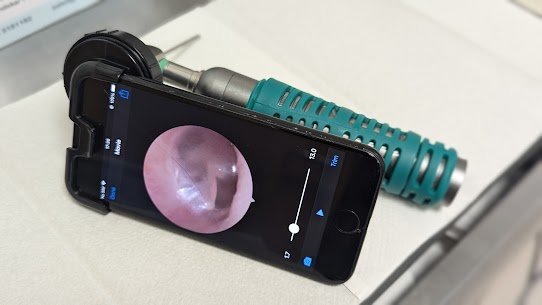
Camera scoops and wax removal tools. A dentist doesn’t do their own fillings, because it is very hard to work on your own anatomy with your own hands. Even in my own skilled hands, I wouldn’t trust myself to clean my own ears with these devices. One slip can cause damage that can’t be undone, such as a perforated eardrum that needs an operation. A camera that only lets you look inside, used hygienically, is fine. Anything designed to scoop or dig wax out is not.
Home water and syringing kits. Water carries a real risk of infection and needs carefully controlled conditions. There are reasons someone shouldn’t have water in their ears that even audiologists can’t always rule out, which is why microsuction by a trained professional has become the recommended method.
Ear candles. They are popular, especially on holiday, but the guidance is clear: they are neither safe nor effective. They are sold as if they work like suction, but studies have found they create no suction at all, and the “wax” people see afterwards is residue from the candle itself. You are also holding a flame next to your face. Worst of all, they give a false sense that the job is done. Wax comes in many types, and no single tool removes them all. I explain more in why we remove earwax with a camera.
When to stop trying at home
If you have used drops and your ear feels the same, or even worse, that is your signal to stop.
There is a simple reason. If your ear canal is about 97 or 98% blocked, you still hear through the small gap that is left. Olive oil softens the wax and makes it swell slightly, which can close that gap. It feels wrong. You did the right thing, and it seems to have made matters worse.
It hasn’t been a waste of time. The oil has prepared the ground, and the wax will be much easier for a professional to remove. It just means you have reached the point where you need one.
When not to wait
Some symptoms go beyond earwax. Skip the drops and get urgent medical help the same day, at A&E or by calling NHS 111 Wales, if you have:
- Sudden hearing loss, especially in one ear.
- New tinnitus in one ear only.
- Severe vertigo or dizziness.
- Severe ear pain, discharge or bleeding from the ear.
It can be hard to tell whether a sudden drop in hearing is wax or a problem with the inner ear. When in doubt, get checked. If it turns out to be wax, you will likely be asked to have it removed and see whether your hearing improves. If it doesn’t, go straight back. Speed matters here, because treatment for sudden inner ear hearing loss works best when it starts within days.
Who should remove your earwax
Lots of places now offer earwax removal. My advice is to go to a qualified audiologist with the training and experience to look after your ears, not just clear them.
Over the years, I have picked up a number of conditions during routine wax removal that needed urgent medical care. Missed, they could have done real harm. When an audiologist removes your wax, you are also getting a trained pair of eyes on your ear health, and anything worrying is flagged early. That is where the real value lies.
What happens if you come to BestHear
- We start with a chat. We confirm your details, explain what we will do, and ask about your ear and hearing history.
- You complete a consent form online. We email it to you, so there is a clear record.
- We show you your ears first. You see exactly what we see on the camera screen, and we explain each step before we begin.
- You stay in control. If anything feels uncomfortable, a sudden loud noise or a tickle that makes you cough, just tell us and we will adjust.
- We remove the wax with microsuction, then show you your clear eardrums, so you see the before and after.
- A free hearing screening. Most people feel better straight away. If your hearing still doesn’t feel right, a Clinical Audiological Scientist will check it and advise you on what to do next.
Earwax removal at BestHear Clinic costs £60, with the hearing screening included. Book earwax removal online.
The one rule to remember
Your ears are built to look after themselves. Most of the time, the best thing you can do is leave them alone, use olive oil if they are prone to blocking, and keep anything smaller than your elbow out of them. If that doesn’t work, it isn’t a failure. It is just time to let a professional take a look.
Common questions
How do I remove earwax at home safely?
Use olive oil ear drops or spray from a pharmacy. Treat one ear per night, lying on your side for five to ten minutes, once a week or once a fortnight. Never use cotton buds, scoops or ear candles.
Why does my ear feel more blocked after using drops?
Olive oil softens wax and makes it swell slightly. If your ear was almost completely blocked, that can close the last small gap. It means the wax is ready to be removed professionally.
Are ear candles safe?
No. Ear candles are not considered safe or effective. They create no suction, the residue left behind comes from the candle, and they carry a risk of burns.
When should I not use olive oil in my ears?
Don’t use it if you might have an ear infection or a perforated eardrum, if you have had ear surgery, or if something may be stuck in your ear. Have your ears checked first.
How much is earwax removal at BestHear Clinic?
Earwax removal by microsuction costs £60, including a free hearing screening.
Book earwax removal
If drops haven’t done the job, book earwax removal online or call us on 01792 940032. Same-day appointments are available most days.
Warm regards,
Armaj Ali