Heareka Moments Issue 02
Is my child hearing properly? What happens at a children’s hearing test
A plain English guide for parents in Swansea: the signs to look for, how we test, glue ear, headphones, and what it costs.
Most parents who ring me aren’t sure. Some days their child seems to hear everything. Other days they don’t answer when called, or they want the iPad turned right up. A health visitor or a teacher may have mentioned it. Or a school hearing screening has come back as a fail, and the wait for the next appointment feels long when you’re worried about your child’s speech and learning.
If that sounds like your family, this article explains what a children’s hearing test in Swansea involves at BestHear Clinic, what it costs, and what you leave with.
No jargon. Just straight answers.
The signs that make parents pick up the phone
Every child is different, but these are the patterns I hear about most often.
- Their hearing seems to come and go. Responsive one day, in their own world the next. This on and off pattern often points towards glue ear, which I explain below.
- The TV or iPad keeps getting louder. They turn it up until they can follow it.
- They don’t respond when you call them, especially from another room or when there is background noise.
- A cold has cleared up, but their hearing hasn’t. The runny nose has gone, yet your child still seems muffled for days or even weeks afterwards.
- Their speech is behind where you’d expect. Children learn to talk by listening, so a speech delay is always worth a hearing check.
- Someone else has raised it. A health visitor, a teacher, or a failed school hearing screening.
What age can my child be tested?
At BestHear Clinic we see children from three and a half years old until their 18th birthday, when they become adults in law. We ask that all patients under 18 attend with a parent or guardian.
Three and a half is our starting point because that is when play audiometry works well. Younger children usually need different tests, such as visual reinforcement audiometry or brainwave testing (ABR), which we don’t currently offer. Newborn babies are covered by the NHS Newborn Hearing Screening Programme.
How we test changes as your child grows:
- From three and a half, we use play audiometry. Your child shows us they heard a sound by playing a simple game.
- Older children carry on with play audiometry for as long as it suits them. Many clinics stop at around seven, but we find it gives very consistent results well beyond that age.
- From around 10 to 12, most children move on to pure tone audiometry, the same beeps test adults have.
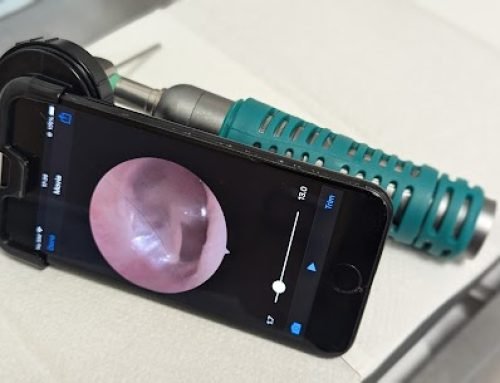
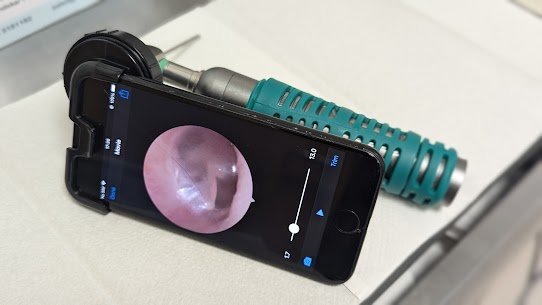
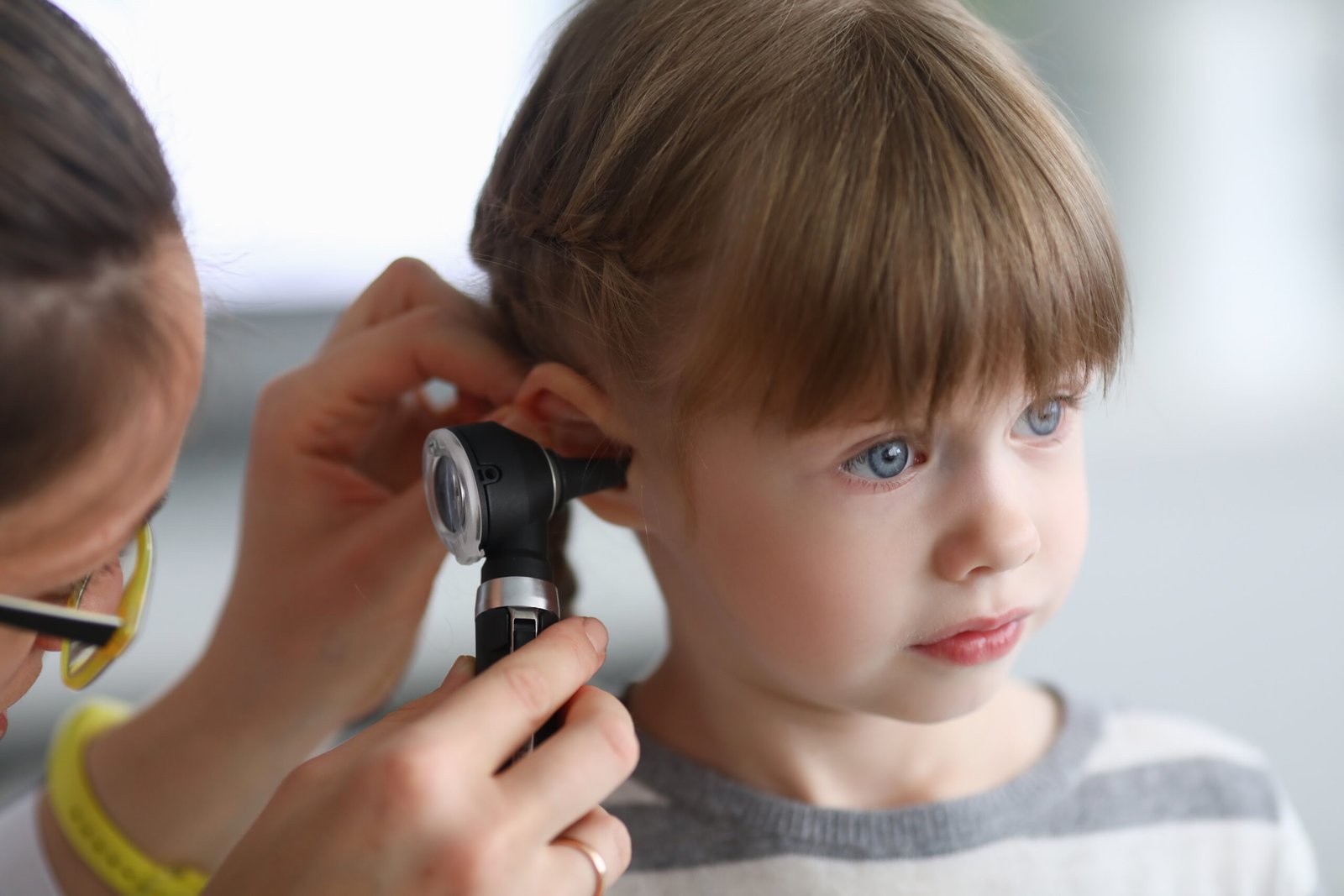
Alongside the hearing test, every child has video otoscopy, where we look inside the ear with a camera, and tympanometry, a quick check of the eardrum and middle ear that is critical for spotting glue ear. Depending on your child’s age, we may add some speech testing too.
What happens at the appointment
We set aside 90 minutes. Most children don’t need all of it, but it means nobody is rushed.
- A chat with you first. We take a thorough history with you in the room, so we understand everything that has been going on.
- Your child sets the pace. We go slowly with younger children and let them decide how comfortable they feel. Very occasionally we split it over two visits, but most children finish in one.
- Looking in the ears. If your child is a little shy, we may look in your ears first and turn it into a bit of role play, so they can see there is nothing to worry about. Otherwise, we go straight to your child’s ears, one at a time, keeping them informed and involved as we go. We show them their own ear on the camera screen, and they usually love that part.
- Tympanometry. Done in the same gentle way, with your child comfortable before we start.
- Play audiometry. The hearing test itself. The audiologist shows your child what to do with a sensory toy, and once they’ve got it, they carry on until both ears have been tested.
- We explain everything. We give you brief updates as we go, then sit down with you at the end, go through the results properly and answer all your questions.
How we turn a hearing test into a game
This is the part I’m proudest of. We call our approach Heareka Play Audiometry, because developing it was a genuine discovery moment for us.
The task strikes a balance between simplicity and variety. The game itself is simple, but there is enough variety to keep it interesting, using sensory toys. We show rather than tell, demonstrating what to do so your child doesn’t have to follow a list of instructions.
Once a child understands the game, they become really motivated, because they want to get through to the next task. With one sensory toy we can play four or five different games and gather more than 50 responses, and those responses are reliable. That is how we can usually get a full set of results, a full audiogram, even with the youngest children we see, on the very first day. It is the kind of detailed, thorough picture of hearing you would normally only expect to get from an adult.
The best sign it has worked? At the end, a lot of children ask if they can play again.
Glue ear: the most common cause of hearing problems in children
Glue ear is when sticky catarrh, or fluid, builds up in the space behind the eardrum, often after a cold. It is very common. According to the National Deaf Children’s Society, around 1 in 5 preschool children have glue ear at any one time, and 8 in 10 children have it at least once before the age of 10.
If you want to know what it feels like, think of your ears on a plane, just before they pop. Now imagine they stayed stuck like that. That is how a child with glue ear typically feels and hears the world around them.
It tends to come and go in phases over days and weeks, which is why parents find it so hard to connect the dots. Your child may seem better after a cold, but the catarrh tends to linger long after the runny nose has gone. In some children, glue ear keeps coming back or lasts a long time, and that can affect their speech and language development. These children may need grommets, a treatment offered by an ear, nose and throat (ENT) specialist that drains the fluid and helps keep it from blocking up the middle ear space.
Tympanometry is the definitive test for it. Together with video otoscopy and play audiometry, it tells us whether any hearing loss is purely down to fluid in the middle ear, comes from the inner ear, or is a mix of both. That distinction matters, because glue ear is typically temporary and the other types of hearing loss usually are not.
The good news is that glue ear usually clears up by itself. Some children only have it once or twice. Others have it on and off, and most grow out of it by about eight or nine. Whichever path your child takes, we guide you through the whole journey and explain each step.
What you leave with
You leave with a full explanation, answers to your questions and, very often, reassurance.
A few days later, we email you a written report as a PDF, and anything urgent is prioritised. The report sets out the referral route clearly, so you can print it and take it to your child’s GP, an ENT specialist, or another specialist clinic if you want to take things further, depending on the findings. We always encourage you to share it with your GP.
How much does a children’s hearing test cost in Swansea?
| Appointment | Price |
|---|---|
| Children’s hearing assessment (ages 3½ to 17) | £150 |
| Children’s earwax removal, booked with a hearing test (ages 3½ to 17) | £60 |
| Children’s earwax removal on its own (ages 3½ to 17) | £120 |
The £150 assessment includes a thorough medical history, video otoscopy, tympanometry, play audiometry or pure tone audiometry, and a written medical report and referral letter combined in one document.
You don’t need a referral. You can book your child’s hearing test online yourself. If you think wax may be part of the problem, see our children’s earwax removal.
Should we wait for the NHS or come to you?
We encourage families to use the NHS children’s audiology service wherever possible. It has a whole multidisciplinary team, and the infrastructure behind it if anything is found.
Most parents find us for one of two reasons. Waiting times can be long, and they’re worried about their child’s speech and development in the meantime. Or they’d like a second opinion. Either way, we’re here as an extra option, and our report is written so you can take it straight to your GP.
Headphones: how loud is too loud?
BBC Radio Wales recently reached out to us, and I was interviewed on this very topic. More children than ever wear earphones and headphones every day. They don’t need to stop. They just need some sensible limits.
- Turn on the volume limiter in the device settings.
- Follow the 60/60 rule: no more than 60 minutes at a time, at no more than 60% volume.
- Use the arm’s length test. If you can hear your child’s audio from an arm’s length away, it is already too loud.
- Explain why. Children are far more likely to stick to the limits when they understand the risk to their hearing.
Why children’s hearing matters so much to me
Honestly, I didn’t expect to end up here. As a student I loved playing with my own nephews and nieces, but I found it awkward doing play tasks with other people’s children. It took time to find my own rhythm. Once I stopped copying anybody else’s technique and kept it natural to me, I found I was good at it.
It has become one of the most rewarding parts of my work. Adults have already learned to speak by the time they lose their hearing. Children are still learning. When we help a child early, you can see the difference in how they develop, and there is nothing quite like it.
The one thing I’d want every parent to know
Hearing is a developing skill, just like walking or running. It is far more complex than most of us imagine, and children need the right hearing experience to develop it properly.
In the UK, the Newborn Hearing Screening Programme picks up hearing loss that is present from birth. But some hearing problems develop later and can’t be picked up at that stage. School screening catches more, although some children missed theirs during COVID, and we were able to help bridge that gap. Very often, speech delay is the first clue.
So keep an eye on the signs, know that glue ear is common and usually temporary, and if something doesn’t feel right, have your child’s hearing checked by a professional. Peace of mind is worth having.
When not to wait
If your child’s hearing drops suddenly, or they have severe ear pain, a high temperature, or fluid coming from the ear, don’t wait for a routine appointment. Contact your GP or call NHS 111 Wales the same day.
Where to find us
BestHear Clinic is on the ground floor of Parkway Clinic, Lamberts Road, SA1 Waterfront, Swansea, SA1 8EL, just behind Sancta Maria Hospital and the Village Hotel.
- Free dedicated parking. You will need a parking permit, and our receptionist will sort that for you on arrival.
- Everything is on the ground floor, with no lifts or stairs, so pushchairs and wheelchairs are easy.
- A friendly receptionist will greet you, and we are the first door on the right.
Swansea clinic hours are Monday to Friday, 9:15am to 4:30pm. Booking for yourself? Read Issue 01: what happens at an adult hearing test.
Common questions
What age can my child have a hearing test at BestHear Clinic?
From three and a half years old until their 18th birthday, always with a parent or guardian. Younger children and newborns need different tests, which are available through the NHS.
How much is a children’s hearing test in Swansea?
A children’s hearing assessment at BestHear Clinic costs £150. It includes a medical history, video otoscopy, tympanometry, play or pure tone audiometry, and a written report with referral letter.
Do I need a referral for my child’s hearing test?
No. You can book a private children’s hearing test at BestHear Clinic yourself.
What is glue ear?
Glue ear is a build up of sticky catarrh, or fluid, behind the eardrum. It is the most common cause of hearing problems in children, is usually temporary, and is checked with a test called tympanometry.
How loud is too loud for children’s headphones?
Use the volume limiter and follow the 60/60 rule: no more than 60 minutes at a time at no more than 60% volume. If you can hear the audio from an arm’s length away, it is too loud.
Book your child’s hearing test
If any of those signs sounded familiar, it is worth finding out properly. Book your child’s hearing test online or call us on 01792 940032.
Warm regards,
Armaj Ali